
What McCreary County Deed Records Convey
The McCreary County Clerk records deeds, mortgages, releases, liens, plats, easements, restrictive covenants, and powers of attorney. A deed names the parties and describes a transfer. Related filings qualify or release interests tied to the same land.
| Deed Type | What It Does | Common Use |
|---|---|---|
| Warranty deed | Conveys the stated property with expressed warranties | Conventional purchase |
| Quitclaim deed | Conveys whatever interest the grantor holds | Family or interest cleanup |
| Correction deed | Corrects an earlier recorded instrument | Name, description, or reference correction |
| Trustee / executor deed | Transfers through an authorized fiduciary | Estate or trust administration |
| Commissioner / sheriff deed | Records a court- or statute-directed transfer | Judicial or tax-related sale |
When you read a McCreary deed, capture everything on the page. Keep the consideration language, the complete legal description, prior-deed references, reservations, exceptions, and easements. Also keep the signatures, acknowledgment, and the recording stamp. A mortgage or lien records a claim. It does not convey ownership.
Instrument type matters in the sequence. A release can clear a recorded mortgage without moving the land. An assignment shifts a secured interest between holders. An affidavit of descent may explain an estate change that looks nothing like a sale. A plat gives recorded lot references, while the deed carries the conveyance language. Search around the same party names and dates. Do not limit the index to the word "deed."
From qPublic Reference to Clerk Image
Start with an address and little else. The McCreary PVA qPublic search displays an owner. It also shows a map number, account/PID, acreage, location, and deed book/page. Carry those clues to the County Clerk online-records route and its eCCLIX system.
eCCLIX supports indexed searching, viewing, and printing. However, coverage and image availability vary by county and document type, and the earliest McCreary year available online is not published. The What's Available page shows the county-and-type control a visitor uses to check coverage. Treat a blank result carefully. It may mark a coverage limit rather than a missing deed.
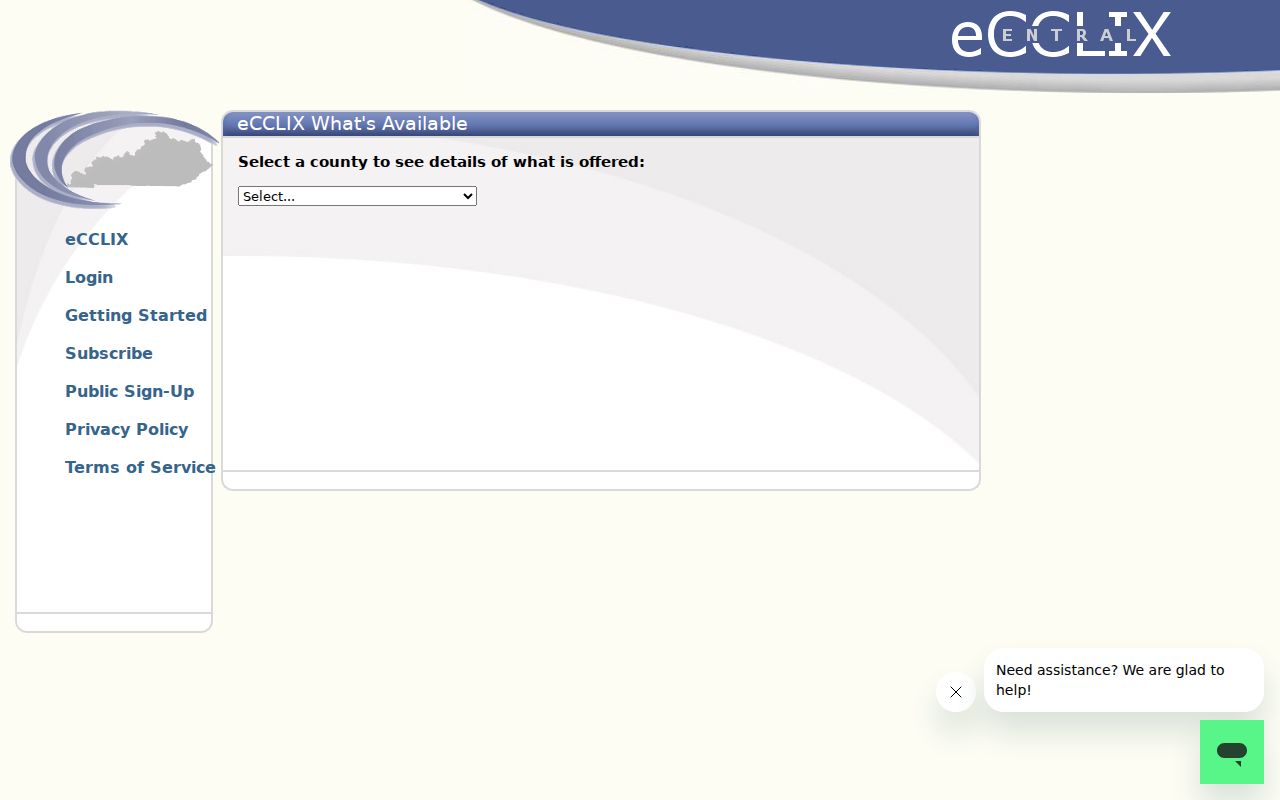
Treat that date result as an online-coverage boundary. Anything older belongs with the clerk or KDLA.
At the counter, bring independent clues that separate similarly named parties. These include the approximate date, instrument type, parcel number, road or community, and any cited book or page. Ask about the public terminal. Does it open older or more detailed index entries than the web gateway? If no electronic image exists, request the original book entry or a locally held scan. Note which source supplied the copy.
Walk McCreary's Grantor-Grantee Index
A grantor conveys an interest. A grantee receives it. Begin with the newest verified deed and trace each grantor's own acquisition backward through the index. Search initials, full names, former names, entities, and alternate spellings.
- Use qPublic to locate the current-roll owner and recent deed reference.
- Open the deed and capture grantee, grantor, date, book/page, and prior-deed recital.
- Search that grantor as a grantee during the likely acquisition period.
- Match legal description, acreage, road calls, and adjoining owners before linking the tract.
- Repeat through the online cutoff, then continue in deed books or microfilm.
- Grantor
- The party conveying the interest.
- Grantee
- The party receiving the interest.
- Chain of title
- The linked sequence of transfers for the same tract.
- Book/Page vs Instrument #
- A volume-and-page citation versus a distinct filing identifier.
Treat 1983 as a Coverage Question
The KDLA land-record inventory lists McCreary deed books for 1912–1982 and 1984–2017. Its omission of 1983 is a catalog question. It is not proof of destruction. Ask whether that interval sits in an original book, a separate index, local microfilm, or another inventory line.
KDLA's inspected table also lists no McCreary plat run. Request a plat by subdivision, parties, related deed, or cabinet and book citation when known. No courthouse fire or catastrophic deed loss is documented for McCreary County.
Note: Report “not listed in the inspected inventory” instead of turning an unconfirmed catalog omission into a records-loss claim.
Cross Predecessor Counties Before 1912
McCreary County was created in 1912 from parts of Pulaski, Wayne, and Whitley Counties. Earlier ownership may sit outside McCreary's deed books entirely. Find the earliest McCreary deed. Use its prior-instrument recital and complete legal description to choose which predecessor county to search.
Historic timber, coal, railroad, road, and company-property language can supply useful keywords. This is especially true near Stearns and the old Kentucky & Tennessee route. Those terms are context only. Confirm acreage, metes-and-bounds calls, adjoining owners, and book references before drawing boundaries.
Use Road and Subdivision Clues Carefully
Local public notices name Pleasant Run and Smith Subdivision in Pine Knot, Mary King Road and Pigskin Road around Stearns, and Lynch Drive parcels near Whitley City. Each is a retrieval lead tied to a dated notice. Pull the cited deed or plat. Compare it to qPublic before calling it a match.
Pine Knot, Stearns, and Whitley City are unincorporated communities. A postal locality, road name, subdivision label, or parcel prefix creates no municipal boundary and points to no separate city recorder.
Electronic Recording Still Has a Paper Past
Recent service material identifies McCreary as a CSC electronic-recording county. A Kentucky legislative bulletin describes portal expansion beginning in 2024. It also sets a June 30, 2026 upload target for specified records. None of this puts every historical deed online. Coverage and history are different questions.
A 2018 KDLA grant gave the McCreary County Clerk $17,341 for scanning and microfilming. That is incremental preservation. The inventory and the clerk remain the dependable routes for older McCreary deed records. Check the access date, document type, earliest online date, and image availability separately.
The provider's upload pattern offers no guarantee that each newly recorded McCreary instrument appears immediately. For a time-sensitive transfer, compare the clerk's recording stamp and index. Ask about an upload backlog too. For historical work, label the evidence's source: eCCLIX, a bound deed book, microfilm, or a clerk-supplied copy.
Obtain a McCreary County Deed Copy
An eCCLIX image can be viewed online, or you can visit Room 139 at 1 North Main Street in Whitley City. The County Clerk also takes requests by phone at 606-376-2411 and by mail at PO Box 699. When ordering a McCreary County deed copy, supply the grantor and grantee names, the approximate recording date, the property location, and the map number, book/page, and instrument type if known.
Be explicit about wanting a plain copy or a certified copy. The clerk does not publish a complete current fee schedule for copying and certification, so confirm image costs, copying charges, certification, postage, and accepted payment methods before placing your order. An index screen may help you locate a filing, but it may not satisfy a court, estate, transaction, or title purpose.
Recorded, not guaranteed. Recording gives public notice of an instrument; it does not validate every statement or provide a legal opinion that title is clear.
No image online? Request the index entry instead. Ask for the instrument, the referenced plat, and any correction or release tied to it. A narrow list keeps the clerk's time and your copying cost down.
Review the returned image before you close the request. Check that every page is present. The recording stamp should be legible, and any exhibits or legal-description attachments should come with it. Match the book and page, or instrument number, against the index. If the deed incorporates an earlier plat or instrument, request that source separately. Note any illegible margin, missing exhibit, or conflicting tract description. Ask whether a clearer scan or an inspection of the original volume is possible. This final comparison is what keeps a correct party-name hit from being mistaken for the correct property.
Keep the certification separate from your research notes. Whenever you summarize the deed later, cite the office, the retrieval date, the instrument reference, and the copy type. Visiting in person? Confirm office hours before traveling. Bring the search log and the parcel card. Ask the clerk to distinguish the index citation from the recorded page image. Ask the clerk also to flag any separate plat or release reference. For a mail request, include return contact information. Ask the office to confirm the total before you send payment. Retain the envelope, receipt, or certification page with the deed. Keep the source and copy type clear.